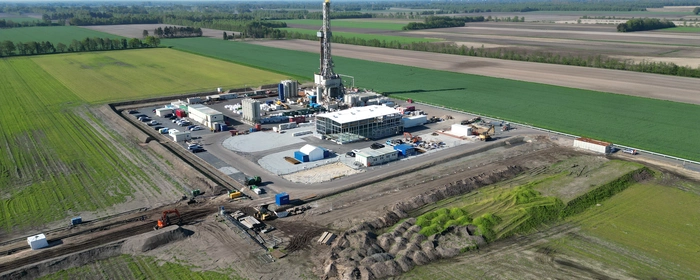
We are realising a modern natural gas extraction project at the Georgsdorf site in the district of Grafschaft Bentheim. The aim is to develop regional energy sources in an efficient, environmentally friendly and safe manner. In this way, we are contributing to security of supply in Germany. The Adorf Karbon natural gas field is therefore an important part of our Base area of activity.
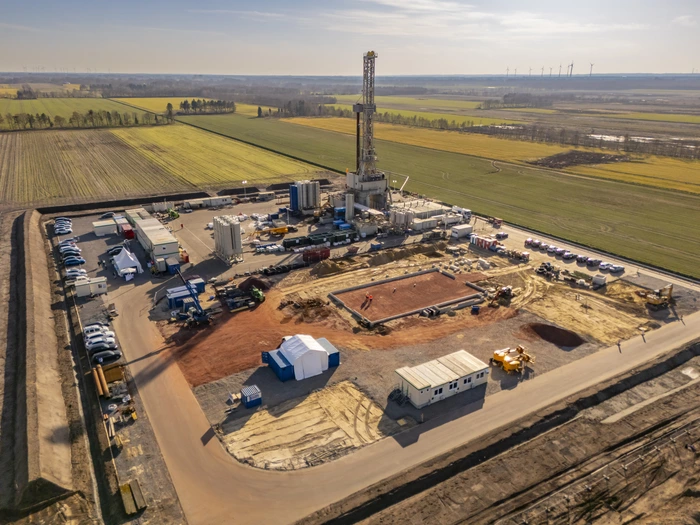
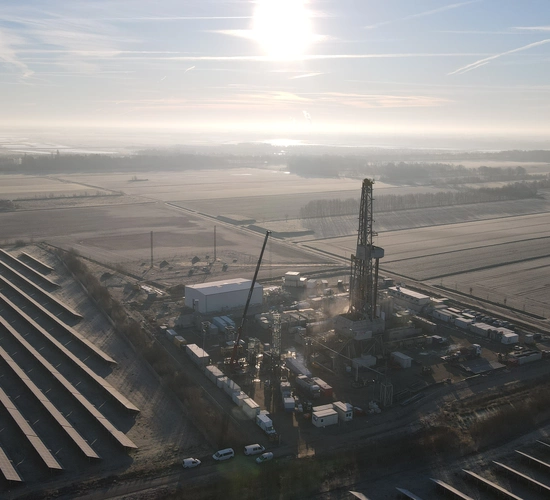
We have now successfully completed drilling work on two new natural gas wells named Adorf Z19 and Adorf Z20. Both wells are located on a former agricultural area south of Heideweg in the municipality of Georgsdorf. They are each more than 4,000 meters long. After completing the final steps, the team on site dismantled the drilling rig from KCA Deutag. Specialist companies had already set up the well site for both wells at the end of 2024.
A success story
We have drilled the Adorf Z19 and Adorf Z20 wells in the Adorf Karbon reservoir. Current geological findings and local experience provided the impetus for this project. We are very familiar with the subsurface in this region, as our experts have already drilled four other wells in the same reservoir since 2019. The wells, named Adorf Z15, Z16, Z17 and Z18, are located at two central field stations - on the peat extraction route in Georgsdorf and at Bathorner Diek in Hoogstede. Two modern processing plants for the raw gas are in operation on site in order to supply around 200,000 households per year with natural gas - close to the consumer and with a significantly better CO2 footprint than all imports.
The two new wells are now set to tap into natural gas reserves in areas not reached by the previous Adorf wells.
Our wells
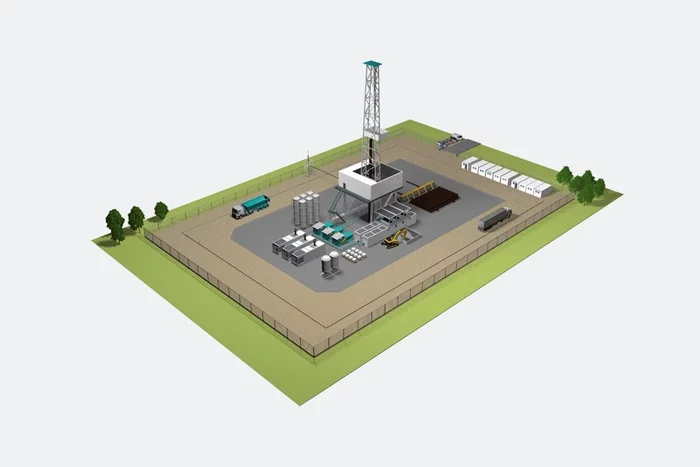
Both wells run underground within a curve. Our experts have sealed the Adorf Z19 and Adorf Z20 wells against groundwater using a system of steel pipes and cement, and have installed shut-off devices and pressure monitoring systems.
Following brief production tests, the new wells will now be connected to the local natural gas network, subject to approval by the relevant authorities.
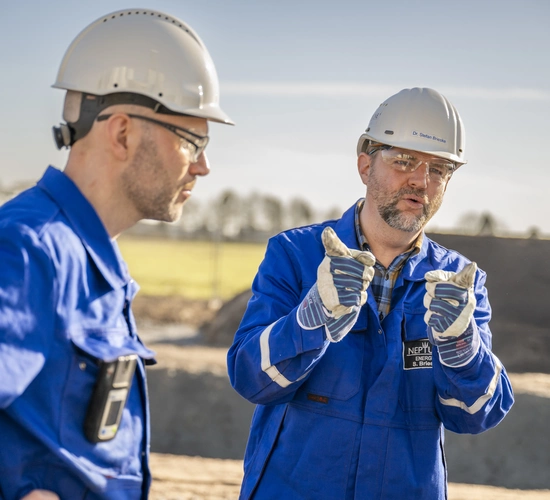
Current planning
Schedule for the Adorf Z19 and Adorf Z20
From autumn 2024
Start of drilling site construction
Winter/spring 2025
Drilling of the natural gas well
Summer 2025
Testing of the Adorf Z19 well, drilling of the Z20 well
Autumn 2025
Testing of the Adorf Z20 well
2025
We are also realising the construction of a processing plant at our central field station. The pipeline connection of the well to the regional natural gas network of Erdgas Münster will also take place this year.
Winter 2025/2026
Start of production for both wells.


Neptune Energy focuses on compliance with safety and environmental protection standards
All work is supervised by the State Office for Mining, Energy and Geology (LBEG). This and other specialised authorities ensure that the safety and environmental protection standards applicable in Germany are adhered to. External experts have reviewed our concepts for the well site and the boreholes and, among other things, considered nature conservation issues - in the accompanying landscape conservation plan, including a species protection assessment and a preliminary environmental impact assessment. The technical reports describe, among other things, how we can avoid any adverse effects on nature and the landscape. In some cases, this is not possible, for example through the sealing of surfaces. For this reason, we have provided compensation and replacement measures for nature conservation. Irrespective of this, we are working to reduce carbon dioxide emissions as much as possible in all our activities. This includes, for example, electrifying plants while at the same time using electricity from renewable sources.



Good neighbourly relations in western Germany
For several months now, the Adorf Z19 and Z20 wells have been successfully producing natural gas. The Neptune Energy team took this as an opportunity to organise a…
learn more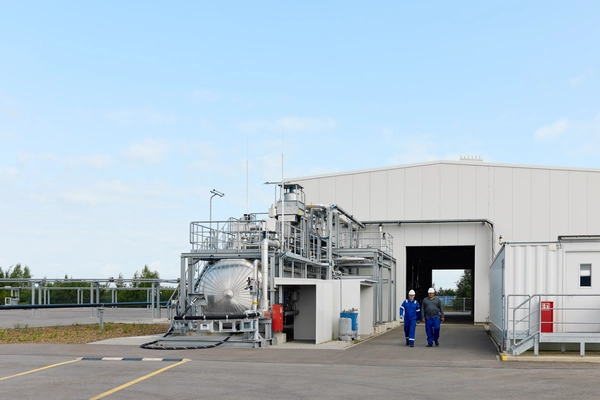
Neptune Energy starts gas production from the Adorf Z20 well in Lower Saxony
The new Adorf Z20 well south of Heideweg in Georgsdorf is now producing natural gas for the local grid.
learn more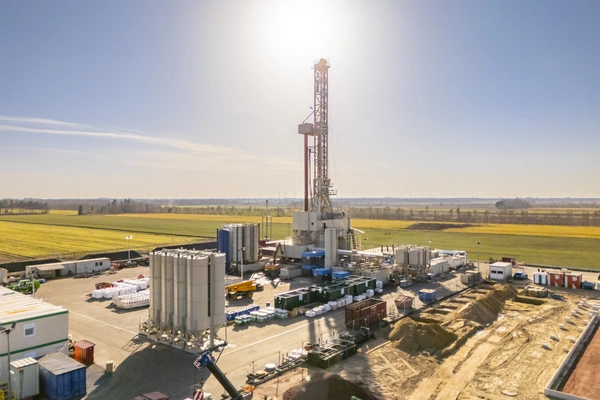
Neptune Energy starts gas production from the Adorf Z19 well in Lower Saxony
Experts from Neptune Energy announced today that the Adorf Z19 well in Georgsdorf is producing natural gas for the first time, which will be fed into the local grid.
learn more